The
Monthly Edit
The First Chapter
October 2026 · THE DIGITAL EDITIONThe Monthly Edit · October 2026
The First Chapter
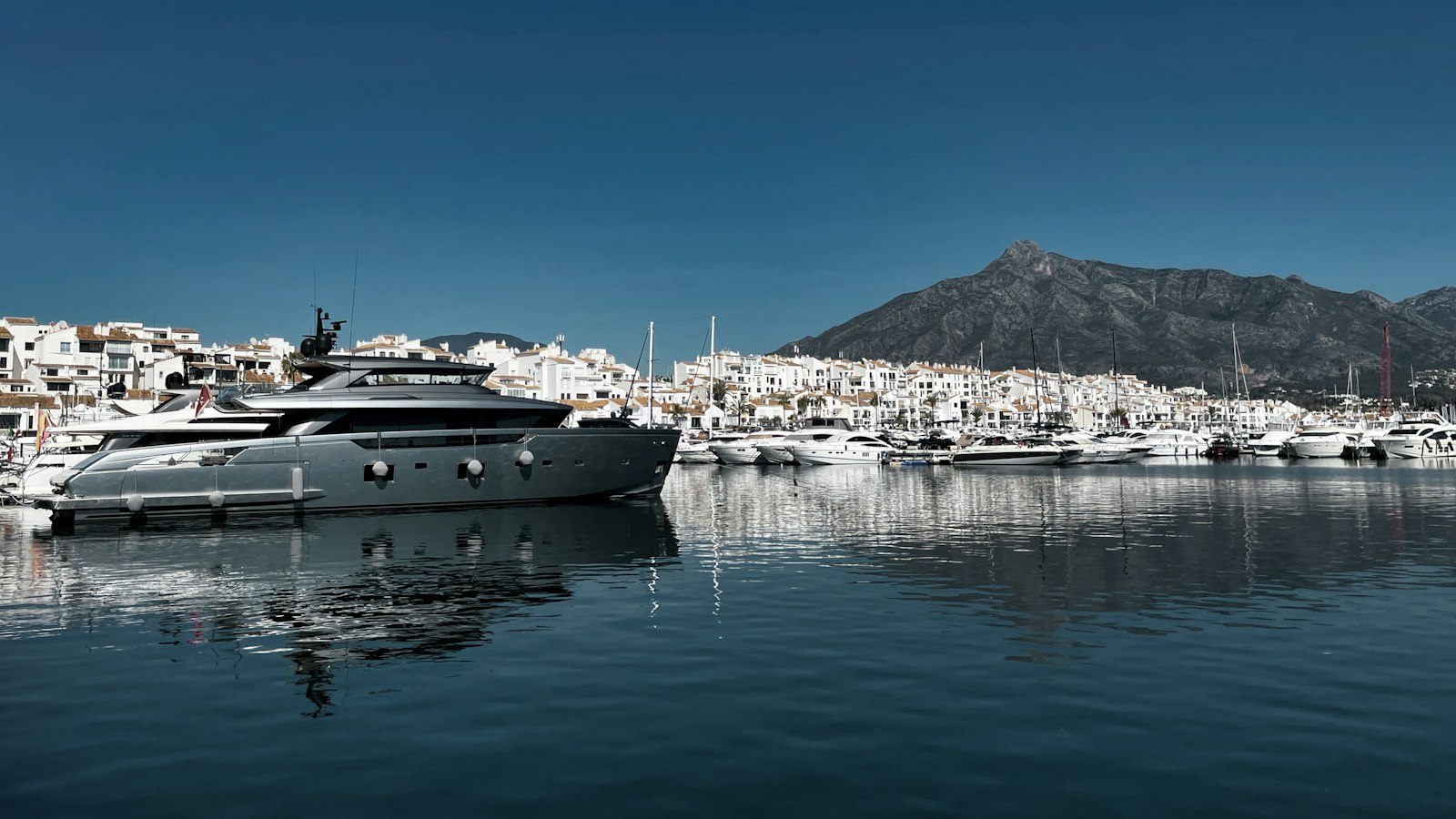
Our inaugural Monthly Edit explores the quiet intelligence of yacht design, the pleasure of an unhurried journey and the objects worth keeping. With a sourced September notebook and three original long-form features, this is a complete edition to settle into.
An original digital edition · approximately 30 print-page equivalents · adapted to your screen
Inside this edition ↓01 · Editor's letter
A first chapter, not a last word
The pleasure of a yacht is difficult to capture in a list of specifications. A shaded seat, a conversation that continues after lunch, a coastline becoming familiar: these are small things, but they are often what remain after the journey. The Nautical Chapter begins with that observation. We are interested in the vessels, certainly, and in the people and decisions behind them. We are equally interested in the life a vessel makes possible.
This is our inaugural Monthly Edit. There is no invented archive of reporting behind it, and no claim that we attended the events mentioned in these pages. Our September notebook draws on official published material. The longer essays are original editorial work created for this edition, rather than a collection of links to daily stories. They move from design to life aboard, then to the objects and rituals that accompany both.
We begin with three questions. What makes a yacht genuinely comfortable? How much of a journey should be planned? And what makes an object worth keeping? None has a single expensive answer. That is part of their appeal. Consider this issue an invitation to look more closely, to make a little more room in the day, and to recognise the distinction between an impressive image and an enjoyable life.
02 · The previous month
September notebook: Monaco, in context
The organiser's published account places the 2026 Monaco Yacht Show at Port Hercule from 23 to 26 September. Its post-show report describes a gathering across the superyacht industry. That is the verified starting point for this month's notebook; it is not evidence that every yacht on display represents a wider market trend, or that an exhibition appearance amounts to a completed sale.
For a reader following the industry from a distance, the useful exercise is to separate the event from the interpretation. An official exhibition page can establish who participated. A builder's release can explain what it chose to present. Neither, by itself, tells us what an owner ultimately paid, how a private visit felt, or which design will prove durable over a decade. Those questions need different evidence.
Our editorial interest after Monaco is the gap between first impression and lasting usefulness. The show provides a reason to look at yacht design, but this issue takes the slower view: circulation, shade, private space, and the rhythm of a day aboard. These subjects remain relevant after the banners come down. Rather than awarding a winner from a screen, we use September's gathering as the opening of a conversation about what deserves attention next.
03 · The previous month
A portfolio is a set of choices
Damen Yachting's official event account records its participation in the September Monaco show and describes the Amels, Xplorer and Yacht Support families within its portfolio. We make no claim here about individual viewings or transactions. The interesting editorial starting point is simpler: even within one builder's presentation, the idea of a yacht can take several forms.
A prospective owner might begin with a visual preference and later discover that the underlying question is how to spend time. Does the imagined holiday revolve around familiar harbours, extended independence, a particular activity, or a large group with different daily habits? A portfolio offers different directions, but its existence does not settle the choice. The strongest brief begins with use rather than a borrowed image of ownership.
Try writing a day before writing a wish list. Describe where breakfast happens, how many people want solitude, which belongings travel with the party, and what counts as a satisfying afternoon. Include the unphotogenic parts: storage, transitions, and the occasions when plans change. This is an editorial exercise, not a technical specification. Its value is in making preferences visible. The most interesting design discussion may start when two people discover that their ideal day on the same yacht looks entirely different.
04 · Original feature · Design · Part I
The quiet yacht
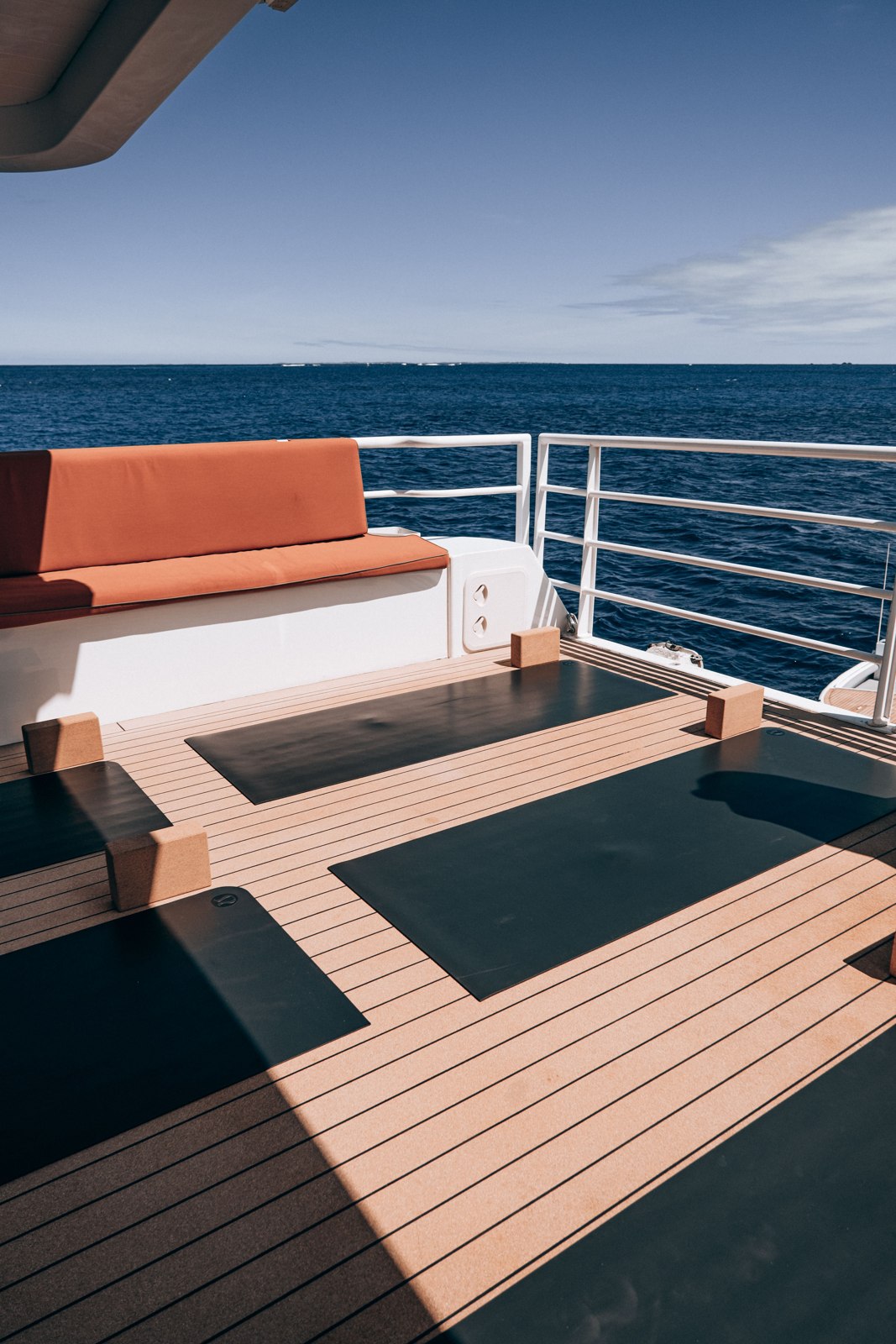
Imagine arriving aboard without being immediately shown the most spectacular room. Instead, there is somewhere comfortable to pause, set down a bag, and understand where to go next. The view is present, the welcome is clear, and nothing requires explanation. For this issue, that is the beginning of a quiet yacht: a design whose intelligence is felt before it is announced.
Quiet in this sense is not an acoustic measurement. Nor is it a synonym for beige upholstery or a restrained exterior. It describes the amount of unnecessary effort removed from a day. An object can be visually dramatic and easy to use; a minimal room can be surprisingly demanding. The distinction lies in relationships between spaces, objects and people, rather than in the number of decorative details.
A useful design brief might ask for an easy breakfast, a private conversation and a comfortable place to read. These wishes sound modest beside a major construction project, but they are exacting. They require the designer to understand habits and competing needs. They also invite a more honest conversation than a list of fashionable amenities. The question becomes whether a space supports a life, not simply whether it will photograph convincingly when every cushion has been arranged and every guest has stepped out of frame.
05 · Original feature · Design · Part II
Draw the ordinary day
Begin with the hour before anyone is expected to be sociable. One person wants coffee outdoors, another is still asleep, and a third has opened a laptop. The design challenge is not to provide three luxurious objects. It is to let three different mornings coexist without making one person feel that they have inconvenienced everyone else.
Now move through lunch, a return from shore, a change of clothes, an afternoon rest and an evening gathering. Where do these moments overlap? Which transitions require people to cross a private area? Where do bags accumulate? Where is a conversation likely to interrupt somebody reading? These are questions for a design discussion, not conclusions about any particular yacht. Their power lies in putting ordinary behaviour into the brief before finishes begin to dominate it.
It helps to write the awkward day as well as the perfect one. A guest feels unsociable. An outdoor plan changes. Dinner becomes informal. A family wants to remain together without doing the same thing. A convincing yacht should have an answer beyond moving everybody into the largest saloon. In our imaginary brief, success means a choice of atmosphere: places to participate, places to observe, and places to disappear briefly without making the disappearance feel like a statement.
06 · Original feature · Design · Part III
The threshold matters
The boundary between inside and outside is one of the most rewarding places to study a yacht. A photograph tends to treat it as a line to erase: doors open, interior and deck appearing continuous, the horizon completing the composition. The experience of using that boundary is richer. It includes a pause, a change of light, and the decision about whether to join the conversation outdoors.
Our ideal threshold has a purpose beyond looking seamless. It offers a place to orient oneself and a clear sense of what belongs where. A chair can acknowledge both the room and the view. A table need not occupy the exact centre of a photograph to be in the right place for somebody carrying a book. These are matters of arrangement and observation, to be resolved with the people responsible for the design.
The temptation is to make every transition invisible. Sometimes a gentle distinction is more welcoming. A change in texture or atmosphere can tell a guest that they have reached a different kind of space. This is particularly valuable when a yacht is hosting people with different habits. The goal is not an unbroken showroom. It is a series of places whose relationship feels natural, even to someone who has only just stepped aboard.
07 · Original feature · Design · Part IV
Shade deserves the first sketch
In a lifestyle photograph, an uncovered deck can look wonderfully generous. In an imagined afternoon, the seat everyone chooses might be somewhere less prominent: a corner with an agreeable outlook, a surface for a drink and enough shelter to stay for another chapter. A design brief that begins with where people will actually linger may produce a different hierarchy from one that begins with the hero image.
This is not a prescription for an awning or a technical judgement about any layout. It is an argument for giving everyday comfort a place at the start of the conversation. Ask where two people would sit for an hour, rather than where twelve could stand for a photograph. Ask which spaces remain appealing at different times of day. The answers should be developed by the design team for the vessel and its intended use.
Generosity can mean leaving something unprogrammed. A deck does not always need another named amenity. An area with a clear purpose and enough breathing room may feel more luxurious than an arrangement filled with competing features. In our quiet-yacht brief, shade is part of a larger ambition: to make lingering feel like the intended activity. A good place to do nothing should never appear to be whatever space remained after everything else was installed.
08 · Original feature · Design · Part V
Materials after the photograph
A material sample has a controlled life. It is held under favourable light, isolated from neighbouring textures and judged while new. A room has a different existence. Sleeves brush its surfaces, books are left open, and the light changes. Before choosing a finish for its immediate impact, imagine how it will participate in that ordinary life.
Our interest is not in declaring one material universally superior. Such decisions involve requirements that a photograph cannot resolve. The editorial question is about coherence. Does the chosen surface belong with the way the space will be used? Is the combination pleasing when it is not perfectly staged? Can the design retain its character when personal possessions appear? A room that only works when it is empty may be a compelling image and a frustrating place to inhabit.
Patina is often romanticised, but it should be discussed precisely. Which changes are welcome, which are unacceptable, and what care is expected? Those answers belong in a conversation with the maker and the team responsible for upkeep. They also reveal personal taste. Some owners enjoy signs of use; others value visual consistency. Neither preference needs a moral argument. A thoughtful brief simply names it, so that the chosen atmosphere is one the people aboard can comfortably live with.
09 · Design notebook
Why the mock-up is interesting
Feadship describes full-scale interior mock-ups in its published design process, used to confirm materials, fabrics and fittings. It is a small factual detail with a larger editorial implication: a drawing and a lived encounter with space are different kinds of knowledge. A room can be persuasive on paper while leaving important questions unanswered until somebody stands within its proportions.
This does not make an attractive rendering unhelpful. Images allow a team to share possibilities quickly. But they are unusually good at making one viewpoint convincing. A person brings movement, distraction and habits. They notice where a hand reaches, what enters peripheral vision and whether a conversation feels comfortable. Those observations are not always the things that dominate an initial presentation.
The same principle can shape how a reader looks at any interior. Instead of asking only whether it is beautiful, imagine arriving, sitting, getting up and returning with something in hand. Imagine two people doing different things at once. Treat that exercise as a source of questions rather than a substitute for professional evaluation. The important shift is from looking at a room to thinking within it. Design becomes more interesting when its success includes the moments that would never be selected for the brochure.
10 · Original feature · Design · Part VI
A room for being alone together
Shared travel creates a pleasant contradiction. People choose to be together, then discover that togetherness needs intervals. A comfortable yacht can acknowledge this without making privacy feel like withdrawal. The most valuable room may be one where several people can share the same atmosphere without sharing the same activity.
Picture a small group after lunch. One person reads, another sorts photographs, two speak quietly. Furniture need not force everyone into a single conversation circle, but nor should the space resemble separate waiting areas. The desired quality is permission: the arrangement makes different levels of participation feel equally welcome. Lighting, orientation and the placement of surfaces all become part of that social choreography.
For a design brief, this is a better starting point than the instruction to create a relaxed atmosphere. Relaxed for whom, doing what, and in whose company? Specific scenes expose hidden assumptions. The host who loves a long communal table may also value a separate morning corner. The guest who enjoys an evening gathering may need an undisturbed hour beforehand. Our quiet-yacht feature ends here, with an unglamorous but powerful measure of luxury: people can enjoy one another without having to negotiate every moment of proximity.
11 · Original feature · Life aboard · Part I
The unhurried itinerary
An itinerary can become a performance before a journey has begun. The names look impressive, the days are neatly filled, and each stop promises a different version of the good life. What the page cannot show is the feeling of always preparing to leave. A holiday can visit many places while offering surprisingly little time to inhabit any of them.
This feature proposes a different editorial brief: choose the quality of the days before the quantity of destinations. It is not a sailing route, a passage plan or advice about operating a vessel. Those decisions belong with the responsible professionals and current conditions. It is a way to describe the experience you hope a journey will create before dates, distances and reservations harden around it.
Start with three desired memories. Perhaps breakfast without a timetable, an afternoon exploring a place on foot, and a dinner that has no reason to end quickly. Then ask what those memories require. Often the answer is less movement, fewer competing commitments and enough space to change one's mind. An unhurried itinerary is not an absence of ambition. Its ambition is to make the journey feel abundant without making every day crowded. The most valuable blank on the page may be the one you resist filling.
12 · Original feature · Life aboard · Part II
Arrival should have its own afternoon
The first afternoon deserves more respect than it usually receives. Guests arrive carrying the pace of the world they have just left: delayed messages, unfinished conversations and the small fatigue of getting somewhere. A heavily scheduled welcome can ask them to perform enjoyment before they have properly arrived.
In our imagined journey, the first invitation is simple. Put down the bag, choose something to drink, and become familiar with the place. The host need not narrate every feature immediately. A brief, warm introduction can leave room for discovery, while the crew handles the necessary onboard orientation. The distinction is between making someone comfortable and overwhelming them with evidence that comfort has been arranged.
An uncommitted afternoon also gives a group time to reveal its natural rhythm. Some people want conversation; others want a quiet change of clothes and ten minutes alone. There is no need to treat these differences as a problem to solve. They are useful information for the days ahead. By evening, the group may be ready for a shared plan that feels chosen rather than imposed. The first luxury of the voyage is therefore temporal: the permission to stop travelling before being asked to begin the holiday in earnest.
13 · Original feature · Life aboard · Part III
One anchor experience, not six
A day becomes easier to remember when it has a centre. That might be a long lunch ashore, a gallery visit, a walk through a town or an afternoon spent aboard. The activity need not be extraordinary. Its purpose is to give the day a shape while leaving the edges open to weather, mood and ordinary curiosity.
Think of this as an editorial approach to a holiday, not a rule to impose on everybody. Some travellers enjoy tightly arranged programmes; others feel confined by them. The useful question is what each person expects to get from the shared time. A single anchor experience can be a compromise: enough intention to avoid drift, enough freedom to avoid a succession of appointments.
The danger is quietly expanding the one plan until it contains six obligations. A lunch acquires shopping, a tour, photographs and an evening reservation. Each addition is reasonable in isolation, yet the cumulative effect changes the day. Before adding anything, ask whether it deepens the chosen experience or competes with it. Sometimes staying longer at one table is the more distinctive choice. The story you tell afterwards may be about a conversation rather than a collection of locations, and it may be better for that.
14 · Original feature · Life aboard · Part IV
Ashore, without a checklist
A waterfront can make a visitor feel that the town exists only in relation to the boats. Walk a little further and a different place often comes into view: ordinary errands, small shops, residents meeting for coffee. The rewarding part of going ashore may be this adjustment of scale, from a destination on an itinerary to somewhere people actually live.
Our suggested attitude is curiosity without collection. There is no obligation to return with a purchase, a restaurant recommendation or proof of having found something undiscovered. A pleasant street can be enough. So can the recognition that a place deserves a longer visit than today's schedule permits. The ability to leave some things unexplored is part of enjoying a journey rather than trying to finish it.
Keep practical arrangements with the people responsible for them, and allow the personal experience to be lighter. A notebook might record a colour, a doorway or the name of a dish instead of a ranked list. Photographs can become observations rather than evidence. Back aboard, these small details often lead to a better conversation than a competitive account of how much ground everybody covered. A town is not a set of attractions to consume before returning to the yacht. It is a place to meet at its own scale.
15 · Original feature · Life aboard · Part V
A meal with room around it
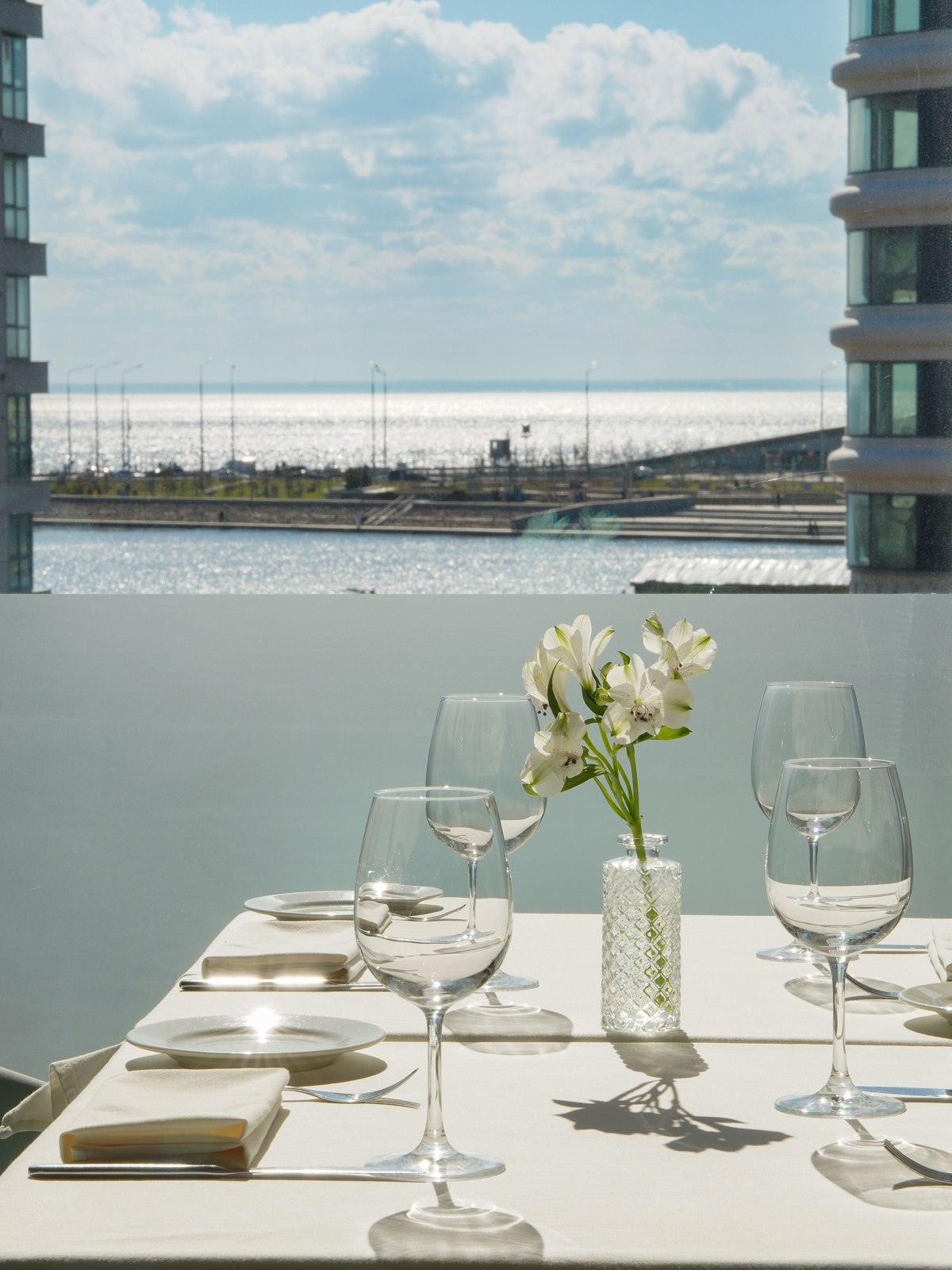
There is a difference between a memorable meal and a meal surrounded by expectations. The second must deliver atmosphere, novelty, photographs and a story for later. The first may only need good company and enough time. On a shared voyage, lowering the burden on a single dinner can make the whole evening more enjoyable.
For our imagined itinerary, hospitality begins before the table is laid. Guests can communicate preferences and dietary needs to the people arranging the food, without turning those conversations into a public performance. The menu and service should be discussed with the responsible team. What interests us editorially is the social frame: whether the setting makes it easy to settle, speak and remain a little longer.
A quieter table can be deliberate rather than incomplete. Fewer decorative objects leave room for gestures, serving dishes and the occasional unexpected guest. A meal can acknowledge its surroundings through colour, pace and conversation without staging a nautical theme. Most of all, it can have an unhurried ending. When the plates are cleared, there need not be an immediate next activity. The best invitation sometimes consists of another glass of water, a changed seat, and the shared understanding that no one is waiting for the evening to become something else.
16 · Original feature · Life aboard · Part VI
The weather day
Every imagined voyage contains a perfect-weather day. A better brief also contains the day when an outdoor plan changes. This is not a discussion of forecasting or navigation; those matters belong to qualified people using current information. It is about the emotional design of a holiday when the original picture is no longer available.
A well-prepared host can offer a different kind of pleasure without apologising for the entire afternoon. A reading corner becomes useful, a conversation finds time to develop, or an ordinary lunch expands into the day's main event. The alternative does not have to imitate the abandoned plan. It can acknowledge that the group has been given a different pace.
This is where interior choices and travel choices meet. Rooms that were conceived only as a backdrop may struggle to hold a day. Spaces with books, comfortable seats and a clear sense of welcome have something to offer beyond visual impact. The weather day is therefore a valuable test of the original brief. If the only version of happiness requires every condition to cooperate, the plan has become fragile. A more generous idea of travel leaves several ways for the day to succeed, including one nobody would have scheduled deliberately.
17 · Original feature · Life aboard · Part VII
The last morning is part of the journey
A holiday can end too early, emotionally, when departure begins to occupy the final evening. Bags appear, people start comparing onward plans, and the shared atmosphere gives way to individual logistics. Some of that is unavoidable. But the last morning can still contain a small deliberate moment that belongs to the journey rather than to leaving it.
It might be breakfast in a familiar place or ten quiet minutes with a notebook. There is no need for a grand final experience. Repetition can be more satisfying: the same chair, the same view, the recognition that a once-unfamiliar space has become comfortable. The details that seemed minor at arrival may now carry the strongest feeling of the trip.
Our unhurried itinerary closes with an editing exercise. Ask each traveller what they would repeat, what they would remove and what they would leave more time for. Resist turning the answers into a score. They reveal differences in taste, and those differences can improve the next brief. The aim is not to optimise every minute of leisure. It is to understand which conditions allowed the group to feel at ease. A shorter list of better-understood pleasures is often a more useful souvenir than a longer list of places already visited.
18 · Original feature · Craft · Part I
Objects worth keeping
A well-chosen object can accompany several versions of a life. A watch moves from an ordinary workday to a marina dinner. A jacket travels between city and coast. A notebook retains the evidence of journeys long after the luggage is unpacked. Their value is not that they transform every moment into an occasion. It is that they remain welcome when the occasion changes.
This feature considers a small personal collection rather than a shopping list. We are not ranking investments or suggesting that price predicts enduring satisfaction. The question is more intimate: which objects earn a place through use, and which mainly satisfy the image of a life one hopes to have? The distinction is difficult precisely because both kinds can be beautiful.
Begin with the objects already reaching for your attention every week. What makes them easy to choose? Proportion, familiarity, comfort and a useful degree of versatility may matter more than the story told at purchase. Then look at the objects that remain in their boxes. Perhaps they deserve a different occasion; perhaps they were selected for somebody else's idea of taste. A coherent collection does not need to be large. It needs to be recognisably yours when the labels are no longer doing the explaining.
19 · Original feature · Craft · Part II
A watch belongs in the picture, quietly
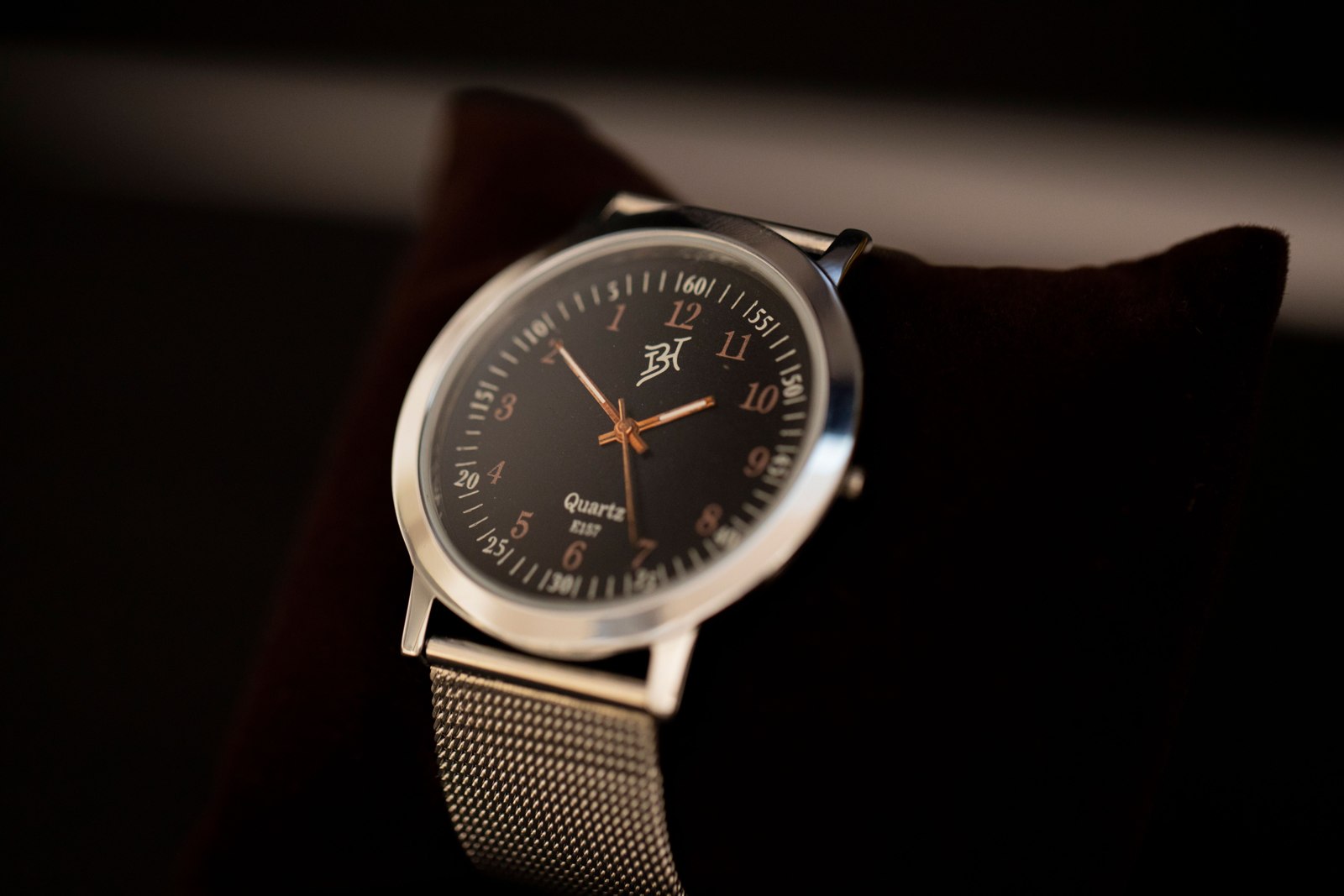
The most convincing watch in a coastal wardrobe may be the one that looks natural with the clothes already worn. It need not announce a maritime identity. A restrained dial, an agreeable case proportion and a bracelet or strap that suits the wearer can make a stronger impression than a collection of themed details assembled to prove relevance.
This is a style argument, not a claim about suitability for water activities. Appearance does not establish a watch's capabilities; those need to be checked with the manufacturer for the exact reference and intended use. The distinction matters because lifestyle imagery can blur it. A watch photographed beside a yacht has not thereby demonstrated any particular technical performance.
For everyday selection, consider the whole silhouette rather than the watch in isolation. Does it sit comfortably under the sleeve you actually wear? Does the visual weight feel balanced on your wrist? Would you choose it for an ordinary lunch as readily as for a planned evening? Those questions are more personal than a fashionable diameter. The right object need not impress everybody. It should make sense repeatedly to the person wearing it, including on the day when nobody notices. That is a quieter, and arguably more demanding, form of satisfaction.
20 · Watch notebook
Tissot PRX: looking at the line
Tissot traces the PRX design lineage to a 1978 model. That historical reference provides a useful starting point for looking at the collection, rather than a reason to treat every version as interchangeable. For this issue, the point of interest is the relationship between case and bracelet: the watch reads as a continuous shape, not simply a dial attached to something that keeps it on the wrist.
Our interpretation is visual. The broad transition from case to bracelet can give the object a purposeful silhouette, while a relatively restrained dial lets the outer form do more of the work. Whether that effect appeals depends on the wearer. An integrated appearance can feel composed; it can also be more visually assertive than expected when seen in a close-up photograph.
This is not a hands-on review, a new-release announcement or a claim that the PRX is the best choice for a yacht owner. No watch was supplied to us for testing. It is an example of how an accessible design discussion can belong in a yachting magazine without pretending that every object must be nautical equipment. The relevant connection is a way of dressing and choosing: proportion, a clear point of view and an object that can be enjoyed outside the setting used to introduce it.
21 · Original feature · Craft · Part III
The wardrobe that travels twice
Packing can reveal how differently we imagine ourselves in different places. City clothes occupy one mental category, holiday clothes another, and anything described as nautical risks becoming a costume. A more useful travel wardrobe allows a few pieces to cross those boundaries without losing their character.
Think in relationships rather than items. A relaxed shirt that works with two existing trousers is more useful than a dramatic piece requiring an entirely new outfit. Colours can be quiet without being uniform: cream, deep blue, faded green or warm brown each offer different ways to acknowledge a coastal setting. These are editorial suggestions, not requirements. The best palette is one that makes choosing easier for its wearer.
The second journey is the return home. Will these clothes still be worn once the holiday has ended? If an object only belongs to a carefully imagined week, its real role may be smaller than it first appears. That does not make occasional clothes a mistake, but it helps make the decision honest. A thoughtful wardrobe supports the life already taking place while leaving room for special moments. It need not carry a logo large enough to explain the destination, and it should never require the wearer to behave like a different person in order to feel correctly dressed.
22 · Original feature · Craft · Part IV
The pleasure of a maker's decision
Craftsmanship becomes more interesting when the conversation moves beyond praise. Instead of calling an object exquisite, ask which decision made it satisfying. Perhaps it is the relationship between two edges, a closure that feels resolved, or a transition between materials that has been handled with care. Specific attention gives the maker's work a shape that adjectives alone cannot provide.
There is also value in knowing the boundary of one's own knowledge. An attractive finish does not prove how an object was made, where every component originated or what conditions existed in the workshop. Those are factual questions requiring evidence. A good story can appreciate visible qualities while keeping unverified claims out of the account.
When meeting a maker, a useful opening question is what they changed during development. The answer may reveal a problem that the finished object conceals. Another is what they hope a user will notice after a year. That shifts the discussion from first impression to continued ownership. These questions are invitations, not a script for pretending expertise. They make space for the person responsible to describe their judgement. The resulting story is often more memorable than a catalogue of materials because it concerns choices, limitations and the patient work of making something feel inevitable.
23 · Original feature · Craft · Part V
Keeping is a form of taste
Taste is usually discussed at the moment of selection. Yet keeping an object is another judgement, repeated over time. The watch that remains in rotation, the shirt repaired rather than replaced, and the book brought on another journey have survived encounters with ordinary life. They say something about preference that a new purchase cannot yet say.
That does not mean every possession deserves indefinite loyalty. Needs change, mistakes happen, and some objects never become as useful as expected. The point is to include continued use in the idea of style. A collection can develop through removal and reconsideration, not only through acquisition. Familiarity may sharpen discernment rather than dull it.
For our coastal collection, the final question is simple: what would travel again? The answer should come from experience, not from an imagined audience. Perhaps the most photographed object stays home next time while an unremarkable favourite earns its place. A magazine about premium life should be able to make room for that outcome. The ambition is not to make every reader want more things. It is to help them recognise what makes a thing worth wanting, and eventually worth keeping. A clear choice can be luxurious even when it ends with no purchase at all.
24 · Life aboard
A library for a slow afternoon
Books aboard can be decorative evidence of taste or an invitation to stop. The difference often lies in whether somebody feels comfortable picking one up. A small, varied selection with room to browse may do more for a shared space than a perfectly matched row arranged to preserve the photograph.
Consider the kinds of attention a holiday allows. A long novel suits one reader, a book of photographs another, and an essay collection offers a way in for someone who has only half an hour. There is no need to make every title nautical. A yacht is already providing the setting; the reading can widen it. Architecture, food, fiction and personal histories can lead the conversation somewhere unexpected.
A borrowed book can become a quiet social connection. A guest leaves a marker, another notices a photograph, and the object begins to hold a little of the group's shared time. The host need not turn this into a formal activity. It is enough to make reading feel permitted, with a pleasant seat and somewhere to put the book down. The ideal onboard library in this issue is therefore deliberately unfinished. It has room for a recommendation, an unplanned discovery and the volume someone promises to bring next time.
25 · Visual culture
The photograph you did not stage
A yacht photograph often tries to remove every sign of interruption. The horizon is clear, the deck is immaculate and the furniture appears untouched. Such images can explain design beautifully. They can also make the experience of being aboard feel oddly absent. The less controlled photograph may preserve something the polished one cannot: evidence of a day actually happening.
A book left open, a chair turned towards a conversation or the changing shadow across a table can become the subject. The point is not to manufacture casualness. It is to notice what already carries atmosphere. A photograph can be precise without treating the people and objects around it as obstacles to a cleaner composition.
Privacy belongs in that attention as well. Ask before including people or sharing moments that were understood to be private, and respect the host's and crew's boundaries. The most satisfying personal archive need not be public. Some photographs work because they are meaningful to a small group. At the end of a journey, a modest image of an ordinary afternoon may restore the feeling of being there more readily than the carefully planned hero shot. Looking well can be more valuable than producing a constant stream of proof that something worth looking at has occurred.
26 · Hospitality
The host's invisible work
Good hosting often feels like an absence of friction. A guest knows where to put a bag, whom to ask a question and whether an invitation is optional. These details rarely form the centre of a lifestyle story, but they shape the experience more directly than an elaborate welcome gift.
The invisible work is partly clarity. Explain the essential arrangements without delivering a speech. Let people know when there is a shared plan and when they can choose their own pace. Make room for different levels of sociability. None of this requires the host to anticipate every desire; it requires an atmosphere in which a guest can express a preference without feeling difficult.
On a crewed yacht, hospitality also includes respecting the people making the experience possible. Discuss requests through the appropriate channels and allow the team to explain what can reasonably be arranged. A polished result should not make the work behind it disappear from consideration. Our preferred idea of premium hospitality has confidence without entitlement. It is generous to guests and considerate of staff, and it does not measure success by how many last-minute demands have been fulfilled. The best compliment may be that everybody, including the host, had enough room to enjoy the day.
27 · At the table
A table without a theme
A maritime setting does not require a maritime motif on every object. The view already supplies the strongest reference. A table can respond through proportion and colour: a little warmth against blue, a texture that catches the light, enough empty space for the meal to arrive. Restraint here is not a rule against pleasure. It is a way of allowing the surroundings to remain part of the composition.
The useful starting point is the kind of gathering. A long conversation asks different things of a table from a brief breakfast. Formality can be enjoyable when everyone understands it, but it should not be imposed merely because the setting appears expensive. Discuss practical service choices with the team responsible for them; the aesthetic should support their work rather than make it harder.
Personal detail often carries more warmth than a complete coordinated scheme. A favourite colour, a small object with a story or a menu that reflects the group's preferences can make the occasion specific. There is no need to produce a new visual concept for every meal. Repetition can create familiarity, and familiarity is one of the pleasures of living aboard. A table becomes memorable when people associate it with the ease of sitting there, not only with how it looked before anyone took a seat.
28 · Inside the magazine
What we mean by a premium story
An exclusive story should offer more than a closed door. It needs a reason to ask for a reader's time: a clearer argument, a distinctive perspective, careful reporting or a sequence of images that changes how a subject is seen. Restricting access does not create those qualities. They have to exist before the membership label is applied.
For The Monthly Edit, the edition itself is part of the work. Stories can speak to one another, an image can create a pause, and a short notebook can prepare the ground for a longer feature. That is why this issue is designed as a continuous reading experience rather than a directory of links. A reader should be able to stay within the issue and feel a deliberate change of pace.
We also want the distinction between editorial and commercial material to be understandable. If a future feature is produced as a paid collaboration, it should be identified as such. This inaugural edition contains no paid placements or claims of brand partnership. The named brands appear as subjects or sources. The standard we intend to pursue is straightforward: let the reader know what kind of story they are reading, make the source of specific facts visible, and earn attention through the quality of the work.
29 · The closing conversation
Three questions for the next journey
Before the next itinerary takes shape, ask what you want to feel more often. The answer might be curiosity, privacy, shared excitement or simple rest. Each suggests a different use of time and space. A vague ambition to have an exceptional trip becomes more useful when translated into an experience that can actually be recognised.
Then ask what you are prepared to leave out. Every additional destination, object and appointment occupies some of the room available to everything else. Editing is not necessarily a sacrifice. It can be the means by which the most important part of the journey becomes possible. The day with fewer commitments may be the one that allows an unexpected conversation to become the memory that lasts.
Finally, ask whose preferences have not yet been heard. A shared holiday is rarely improved by assuming that everyone wants the same pace. Make differences visible early, while the brief can still accommodate them. These three questions are not a formula for perfect travel. They are a way to begin a more accurate conversation. This first Monthly Edit has followed the same approach: look beyond the image, name the experience, and leave enough room for life to enter. The sea supplies a horizon. What happens within it deserves equal attention.
30 · Sources & editorial notes
Colophon: how to read this first issue
The First Chapter is the inaugural October 2026 edition of The Monthly Edit. Its September notebook uses the official Monaco Yacht Show account and Damen Yachting's event page. The design notebook refers to Feadship's published description of its design process. The watch notebook uses Tissot's own account of the PRX lineage. These references support specific statements; they do not imply endorsement of The Nautical Chapter by those organisations.
The longer design, life-aboard and craftsmanship features are original editorial essays, written for this edition. Their illustrative scenes are imagined, not accounts of hosted voyages, vessel inspections or interviews. No yacht, watch or hospitality service was supplied for hands-on review. The itinerary discussion concerns preferences and atmosphere, not navigation or operational instructions. Readers making practical travel or vessel decisions should use the appropriate current information and professional advice for their circumstances.
The page-equivalent count describes an editorial volume, not thirty fixed sheets. On a phone the issue flows as a sequence of readable sections; on larger screens typography and spacing provide the pauses normally associated with a print magazine. The permanent edition address preserves the issue as one work, while its contents allow readers to return to a particular feature. Future editions can build an archive without changing the basic reading structure. This one begins it, with room for the publication to find its voice through close attention rather than noise.
Photography
Cover: Ernesto Norman / Unsplash. Interior photographs: Rachel Claire, Nadin Sh and 157 Industries / Pexels. The watch image illustrates the general essay on personal objects; it does not depict a Tissot PRX.